PASATIEMPO | James Keller | Link to article
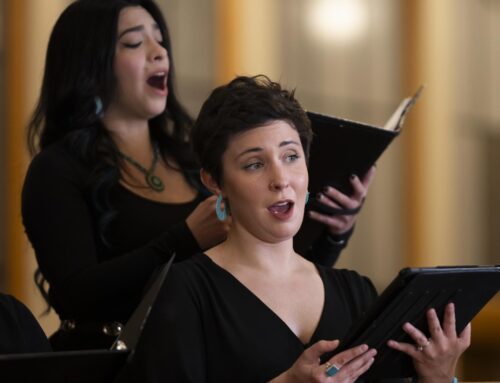
When the Santa Fe Desert Chorale presents the Requiem by Wolfgang Amadè Mozart in three performances beginning Aug. 7 — two in Santa Fe, one in Albuquerque — it will be essaying a piece that is as problematic as it is revered. All music lovers encounter this masterwork sooner or later, and some find that their relationship with it blossoms into an obsession. But eventually they have to grapple with a curious question: Precisely who wrote the music they have come to love so deeply?…
The one the Desert Chorale will use is a relatively recent effort by pianist and musicologist Robert Levin, a devoted and deeply informed Mozartian. It was premiered in 1991 and published in 1993. Joshua Habermann, the Desert Chorale’s music director, writes in a program note, “The completion by scholar and pianist Robert Levin that we present seeks not to replace Süssmayr, but rather to take the best of his ideas and change as little as possible, doing so only where Süssmayr’s completion departs from the expected norms of Mozart’s time.” The most notable novelties of Levin’s reconstruction involve contrapuntal writing, particularly an extended “Amen” fugue provided for the end of the Lacrimosa movement and a solid Osanna fugue to conclude the Sanctus movement. Levin also makes free to rework Süssmayr’s orchestration throughout. But where some of the available completions have aspired to obliterate Süssmayr’s input to Mozart’s score, Levin recognizes that Süssmayr was closer to the source than anyone else, and he accordingly embraces Süssmayr’s work whenever he can. Levin’s completion of the Mozart Requiem aims to draw on all available period information pertaining to the piece, to honor the accretions of performance tradition that seem admirable, and to stir in a generous measure of original creativity. For aficionados of the Mozart Requiem, the Desert Chorale’s performances may shine a new light on an old favorite.